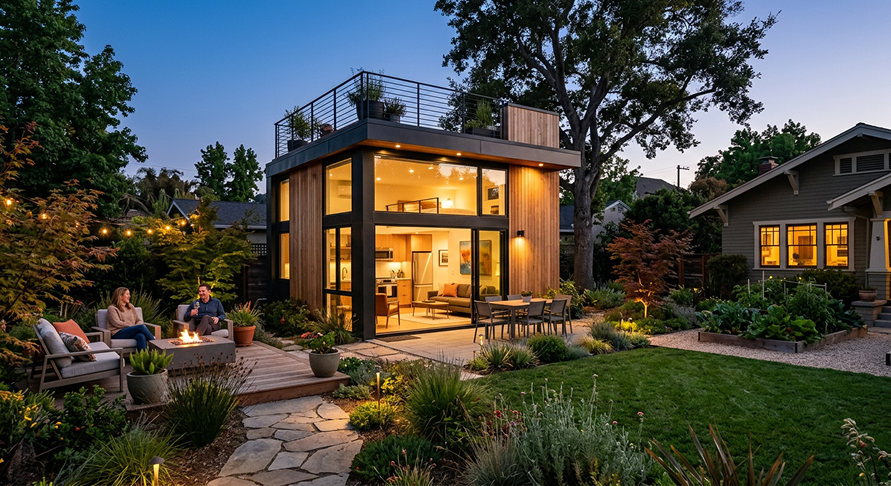
Adding an accessory dwelling unit (ADU) to your property in Lafayette, California, can be a smart way to create additional living space, generate rental income, or accommodate family members. With high property values and growing demand for flexible housing, ADUs have become an increasingly attractive option for Lafayette homeowners.
Whether you're considering a detached backyard cottage, a garage conversion, or an attached addition, understanding local regulations, construction costs, and the permitting process is essential before starting your project.
What Is an ADU?
An accessory dwelling unit is a secondary residential unit built on a property that already has a primary home. ADUs typically include their own kitchen, bathroom, sleeping area, and separate entrance.
Lafayette homeowners generally have several options:
Detached ADU: A standalone structure in the backyard, offering the greatest privacy.
Attached ADU: An addition connected to the primary residence.
Garage Conversion: An existing garage converted into a livable dwelling.
Junior ADU (JADU): A smaller unit, generally no larger than 500 square feet, created within qualifying space in a single-family residence.
Each option offers different advantages depending on your lot size, budget, and intended use.
Why Build an ADU in Lafayette?
Lafayette's desirable neighborhoods, highly regarded schools, and proximity to Walnut Creek, Oakland, and San Francisco make it an attractive location for homeowners and renters alike.
An ADU can provide several benefits, including additional rental income, housing for aging parents or adult children, a private space for guests, and greater flexibility as household needs change.
For homeowners who want to stay in Lafayette long-term, an ADU can also provide an alternative to purchasing a larger home.
ADU Building Requirements in Lafayette, CA
California's ADU laws have made it easier for homeowners to add secondary housing, but Lafayette has specific development standards that must be followed.
Some important requirements include:
Size: Certain ADUs can be built up to 1,200 square feet, depending on the project classification and property.
Setbacks: Many detached ADUs require just four feet of clearance from side and rear property lines.
Height: Detached ADUs commonly have height limits of 16–18 feet, with additional allowances in qualifying circumstances.
Parking: Additional parking may not be required, depending on the ADU's size, location, and eligibility for exemptions.
Rental restrictions: Lafayette ADUs cannot be rented for periods shorter than 30 days.
Lafayette categorizes ADU projects as Class A, B, or C. Class A and B projects generally require building permits, while Class C projects require an additional city ADU permit.
Homeowners should review the latest requirements with the City of Lafayette Planning & Building Department before finalizing their plans.
How Much Does It Cost to Build an ADU in Lafayette?
ADU construction costs vary considerably based on size, design, site conditions, and finishes. For initial budgeting, homeowners might consider the following broad planning estimates:
ADU Type | Estimated Cost |
|---|---|
Garage conversion | $100,000–$200,000 |
Small detached ADU (400–600 sq. ft.) | $200,000–$350,000 |
Larger detached ADU (800–1,200 sq. ft.) | $300,000–$550,000+ |
These are illustrative planning ranges, not verified local contractor quotes.
Lafayette's hillside properties, mature trees, and varying lot configurations can introduce additional expenses. Grading, retaining walls, foundation work, utility connections, and fire access requirements may significantly affect the final cost.
The ADU Permitting Process in Lafayette
Building an ADU typically involves several steps:
Evaluate your property. Review zoning, setbacks, utilities, easements, slope, and access.
Develop your plans. Work with a designer or architect to create a layout that meets your needs and applicable regulations.
Submit for approval. Determine whether your project qualifies as Class A, B, or C and complete the necessary city review.
Obtain building permits. Contra Costa County handles building permits for Lafayette ADUs.
Begin construction. Complete site preparation, foundation work, framing, utilities, and interior finishes.
Schedule inspections. Obtain required approvals before occupying the completed unit.
Lafayette's municipal code generally provides a 60-day decision period for complete ADU applications, subject to certain exceptions. Construction timelines vary with project complexity and contractor availability.
Special Considerations for Lafayette Properties
Not every Lafayette property presents the same construction challenges. Homes in hillside neighborhoods may require additional engineering, grading, or retaining walls. Properties near creeks may face additional setback requirements, while lots with limited access can complicate construction and material deliveries.
Homeowners should also consider how a new ADU will affect backyard privacy, landscaping, outdoor living areas, and the architectural appearance of the main residence.
Is Building an ADU in Lafayette Worth It?
For many homeowners, an ADU offers long-term flexibility and potential financial benefits. Rental income may help offset construction expenses, while additional living space can accommodate changing family needs without requiring a move.
However, the return on investment depends on construction costs, financing, rental demand, and the property's existing value.
Before moving forward, compare multiple contractor estimates, evaluate potential rental income, and establish a realistic project budget.
Getting Started With Your Lafayette ADU Project
Building an ADU in Lafayette starts with understanding your property's possibilities. An experienced local architect, designer, or ADU contractor can help assess feasibility, navigate permitting, and develop a construction plan that fits your budget.
With thoughtful planning, an ADU can become a valuable addition to your property while creating flexible living space for years to come.